

Leeza's Care Connection
Every mission had a beginning, here's mine
My Caregiving Reality
I often speak of caregivers as being heroic. I refer to them as warriors and say they are fierce and fearless. I believe it. I see evidence of it every day while working with our communities of courageous caregivers at Leeza’s Care Connection, where we provide free support, tips, tools and strategies for family members whose life has been turned upside down due to caring. (Www.leezascareconnection.org )
But most of us don’t start out with radical resilience. Some days it’s hard to summon the strength to get out of bed, much less put on the Cape and “save the day.” The reality is holding onto yourself while letting go of someone you love is a seemingly impossible task. And yet, to survive caregiving, it’s the highest order of business. We have to find some sanity sanctuaries amidst the chaos. That often comes from others simply understanding what we’re up against. My favorite thing is seeing a caregiver visibly exhale with relief when they find their way to us and they realize that “we get it.” What a powerful thing it is to be seen.
Who are the ones who manage to build a hopeful tomorrow out of the broken pieces of today? I believe they are the ones who are tough and tender. The ones who realize we are stronger because of our vulnerabilities. The ones who know that trying your best is a noble thing, and if your best falls short today, you get another shot at it tomorrow.
No one dreams of being the world’s greatest caregiver, but life changes on the way to happily ever after and if we are to adapt and thrive, we must become proud of the way we pivot in order to adjust to our new normal. It IS a badge of honor to join the ranks of caregivers, but perfectionists don’t stand a chance. I always say there are two “F” words that create all the difference: flexibility and forgiveness.
There’s a famous Hemingway quote which says: The world breaks everyone, and after some are stronger at the broken places.
I don’t totally buy it. I think the world tests everyone, but we really don’t have to break.
I live in Southern California where many of the streets are lined with impossibly tall palm trees. As I look up at them, I see they often bend under the pressure, but I’ve never seen one break. That’s how we have to be in our role as caregivers.
I find it unacceptable that many caregivers are facing a ticking time bomb. Because of compassion fatigue, they can fail and decline so fast that they often die before their diagnosed loved one. Caregivers are quick to blame themselves but rarely give themselves credit. Let’s try to switch those optics .... we can offer those who sacrifice not only the respect and admiration they deserve, but also a safe place to fall apart, knowing that they won’t be judged or blamed. We can step up and show up and offer our help by listening and validating their journey. We can give them credit for the extraordinary effort they are offering.
You can hold onto yourself while letting go of someone you love. You can be radically resilience and fiercely optimistic, but you can also give yourself credit for where you are right now. You can put down your sword, pick up a glass of wine and in your best Scarlett O’Hara persona say: “tomorrow’s another day”!
Please let us know how we can help you on your caregiver journey info@leezascareconnection.org (888) 655-3392
-Leeza Gibbons, FCTA (Former Caregiver Turned Advocate)
Life doesn’t always go as planned. The people we love get sick and that is often when we face our biggest moment of truth. My family’s journey with my Mom’s Alzheimer’s Disease allowed me to see how we were called upon to show up in our own lives and grow our courage in ways we never imagined. It’s that way with everyone who faces a health crisis and wonders what they will do and how they will manage.
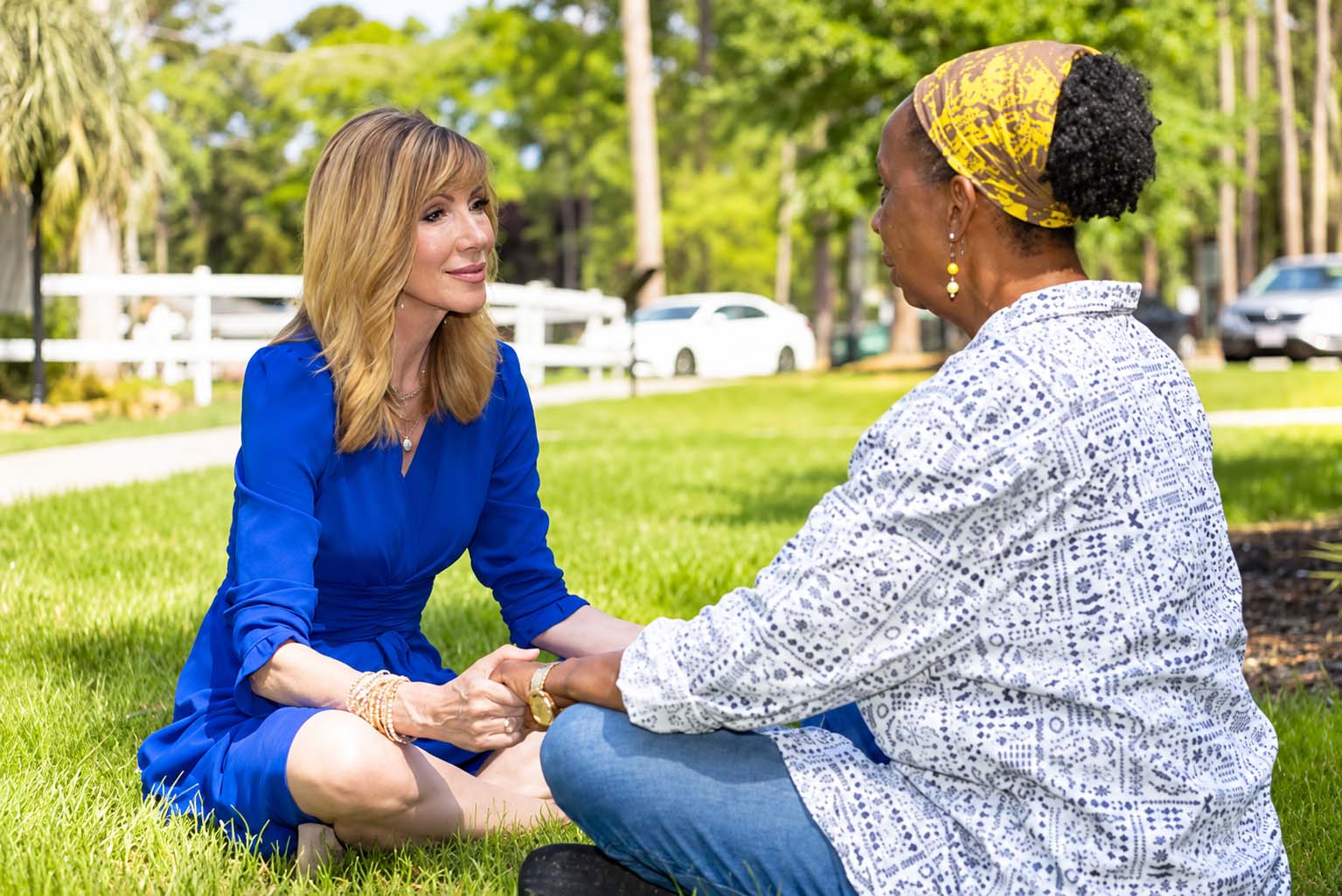
Years ago we created what we wished we had when our family was lost, frustrated and frightened while caring for my mom. It was a promise I made my mom, “to tell her story and make it count.” By offering our free programs to family caregivers I have learned that it takes great strength to know your limits.
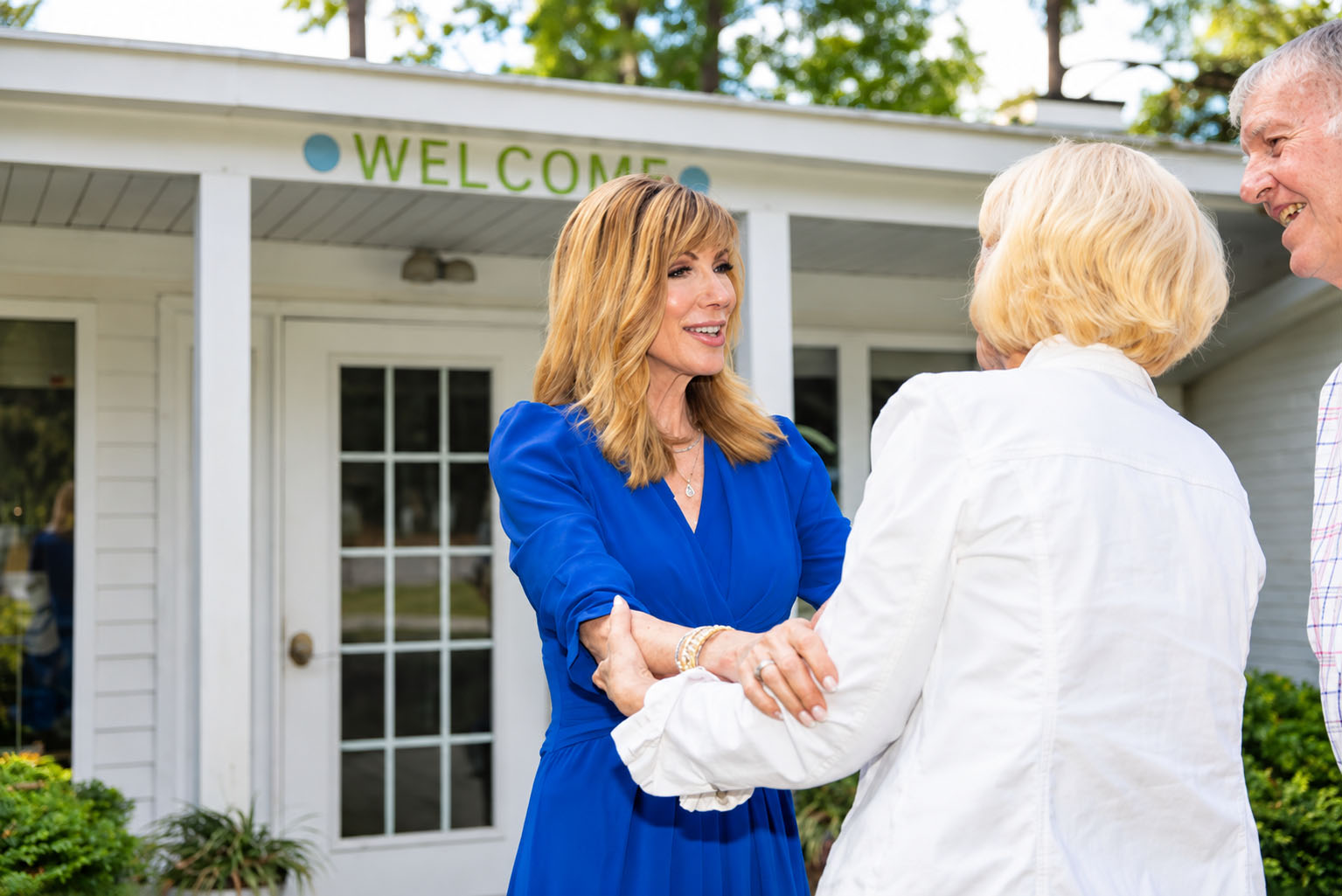
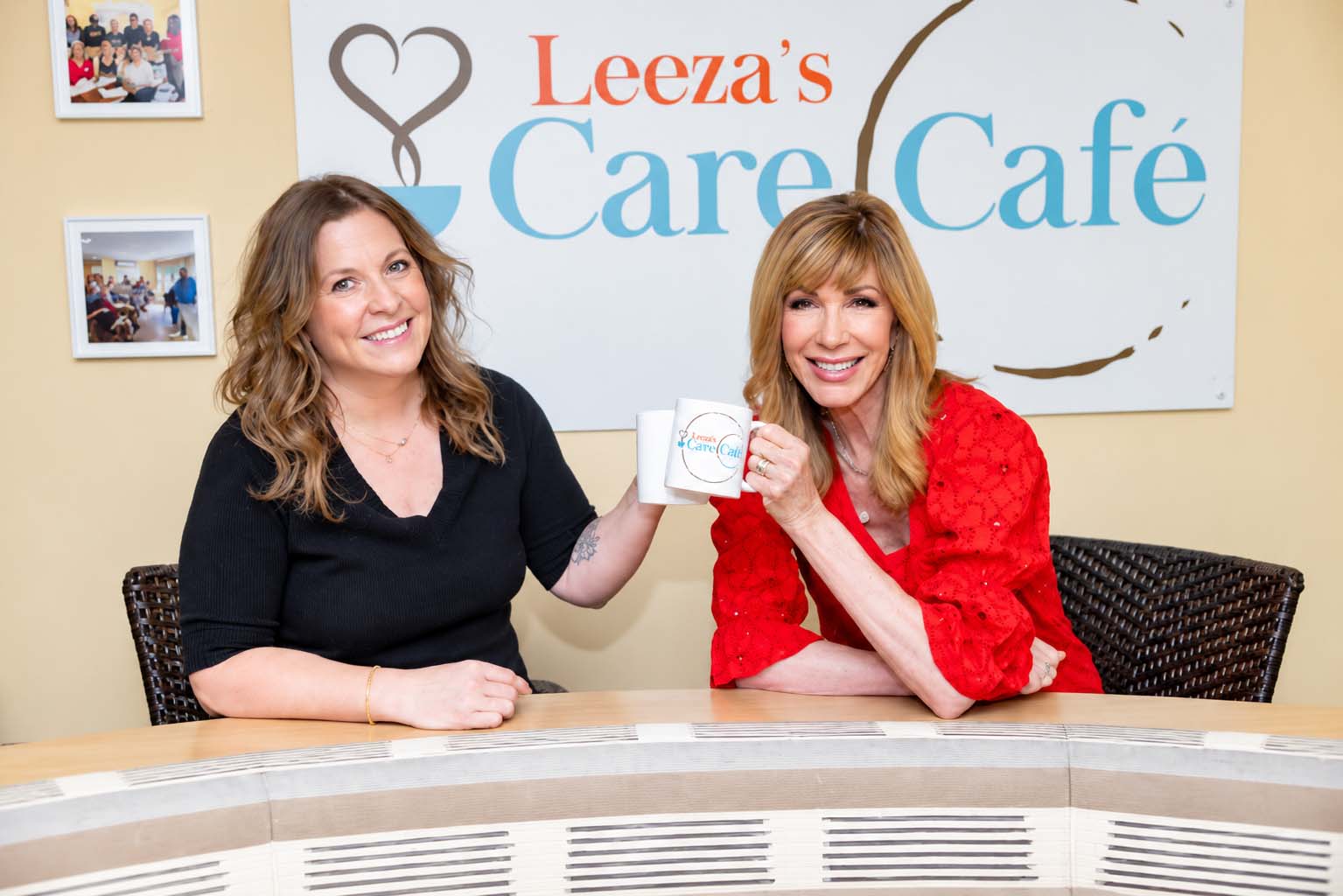
At Leeza’s Care Connection, we are a supportive hug, a safe place to cry, a room for worry and a community of care. We are a family who gets that being a caregiver can be both a burden and a blessing. But more than that, we are a team of people who have been there. We can hold your hand and help you find answers. We help you summon your strength and call on your courage for the difficult path you must walk NOW as you become resourceful with your “new normal” way of life caring for someone you love.
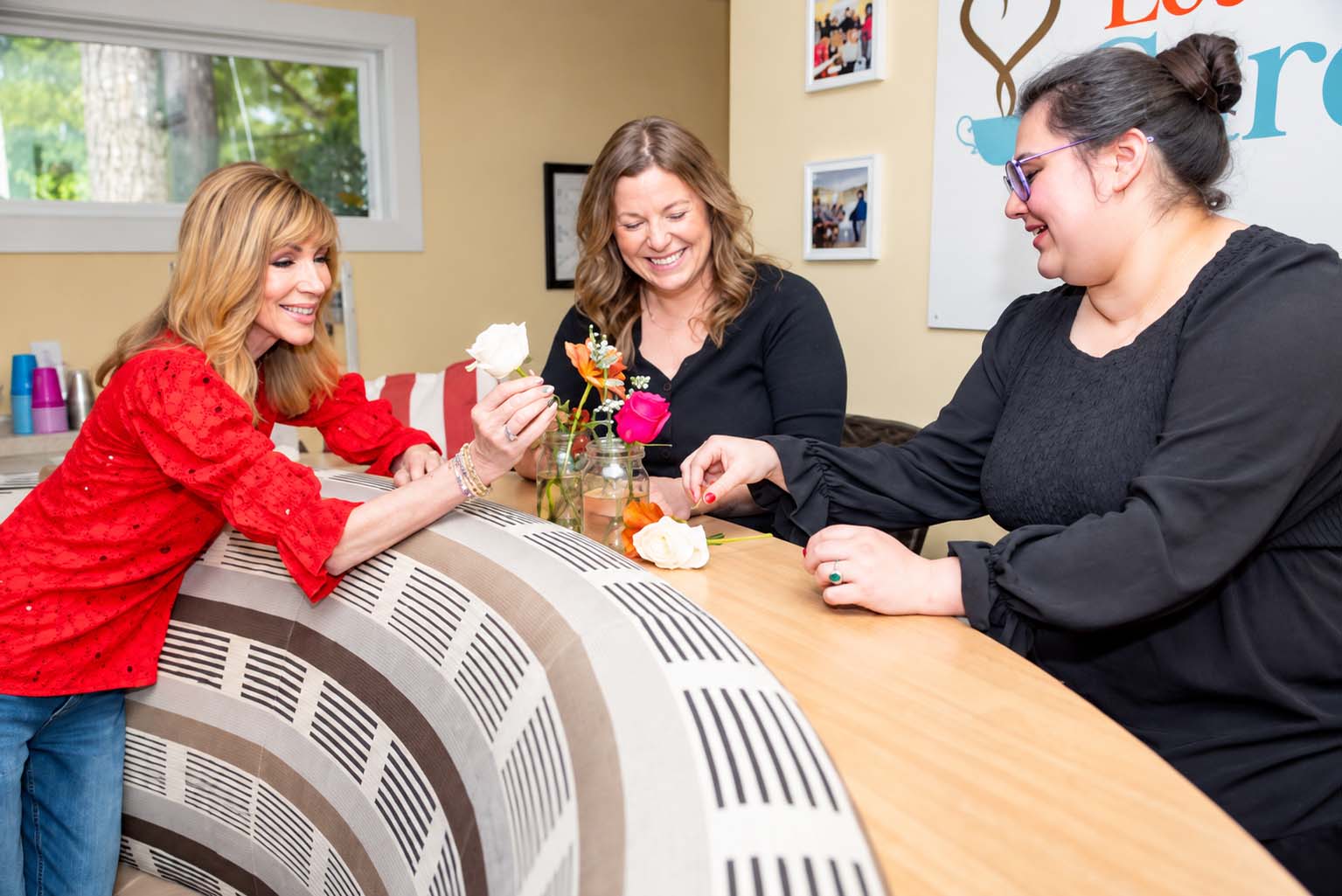
A place to call home, a rejuvenating oasis, a place to find your sense of calm, and a place where you can develop skills to help you remain grounded, steady and strong, our Leeza’s Care Connection living rooms were created with you in mind. We invite you to lock arms with your fellow warriors and your own strength of spirit as you take on one of the most meaningful and important roles of all – caregiving for the one you love.
Caregiving Q&A with Leeza
What do you wish every family caregiver knew before beginning their caregiving journey?
At the start, you may not feel capable or prepared. That’s normal — caregiving won’t wait for you to be ready. You get ready by showing up every day. There are few things in life more rewarding or more purpose-driven than this. But let’s be honest: it’s hard. It can eat into your days and nights, your career, your relationships, even your sense of who you are. We’ve spent decades telling caregivers to “be strong,” “take it one day at a time,” “remember self-care.” Good reminders, sure. But they miss something deeper.
Caregiving is a practice. A series of losses, adjustments, and moments of incredible grace, all mixed together. You don’t have to know how to do it all on day one. What you actually need is permission — permission to ask for help before you’re desperate, to build your support team before you’re in crisis. There will be moments when you question whether you’re enough. Nearly every caregiver does. That’s not failure, that’s the job. Perfection was never the goal. Presence is.
So here’s what I want caregivers to know: love alone isn’t enough — and that’s not a failure, it’s a fact. You were never meant to carry this alone. And being a good caregiver should never require sacrificing the person you are.
“Caregiving isn’t about doing it all alone; it’s about showing up, asking for help, and finding strength in connection. ”
– Leeza Gibbons
How can caregivers care for themselves while supporting someone they love?
We’ve all heard “you can’t pour from an empty cup.” True — but for a lot of caregivers, it feels impossible in practice. Here’s the thing, though: self-care doesn’t have to be some big, sweeping gesture like a massage or a vacation. Sometimes it’s just saying yes when someone offers to sit with your loved one for an hour. Sometimes it’s keeping your own doctor’s appointment, taking a walk around the block, or sitting in silence with a cup of coffee before the day starts. The goal was never to escape caregiving — it’s to stay present for it without disappearing yourself in the process.
I remind caregivers of this often: you matter. Not after caregiving, not someday — today. You can hold on to yourself even while you’re letting go of someone you love. Because when caregivers take care of themselves, everyone they love benefits too.
When I was actively caregiving during my mom’s Alzheimer’s journey, I kept an audio journal — just for my scariest thoughts, the ones I was almost ashamed of, the ones I was afraid to say out loud. I needed to give voice to that pain, like small tremors before a bigger quake. I always say “you can’t heal it if you don’t reveal it,” and that reveal can look like a lot of things. Sometimes it’s pulling over on the side of the road and just screaming for a minute. Sometimes it’s sitting teary-eyed in a warm bath at the end of the day. Caring demands that you find your own sanity sanctuaries — and protect them like your life depends on it. Because it does.
What role does community play in helping caregivers feel less alone?
Oh, this is a big one. Isolation might be one of the hardest parts of caregiving. It’s genuinely hard to find people who “get it.” That’s actually one of the reasons I created Leeza’s Care Connection — I wanted a community of people who’ve stood exactly where you’re standing, on a path that’s anything but easy. Friends often don’t know what to say. Family members may not fully understand. And little by little, caregivers start to believe they’re the only ones feeling exhausted, overwhelmed, and conflicted. Community breaks that spell.
The moment someone says, “That’s me too” — shame starts to loosen its grip. Caregivers don’t necessarily need someone to fix their situation. They need someone who understands it, who can just bear witness to it. So much healing starts the moment you realize you don’t have to explain every feeling to be understood. That’s why I believe the opposite of caregiver burnout isn’t perfection — it’s connection.
For me, this isn’t just a feel-good idea—it’s essential. Community is as important to our healthcare system as any piece of medical equipment. When caregivers get overwhelmed or burn out, families struggle, more people land back in the hospital, and others end up in emergency rooms or long-term care. Those effects spread to workplaces, the healthcare system, and whole communities. Supporting caregivers isn’t just a nice thing to do—it’s a wise investment in the health of all of us.
What’s one caregiving myth you’d like to change?
I’d push back on the myth that caregiving is a private family responsibility. It’s not — it’s a public health issue, a workforce issue, an economic issue. We need to stop treating it like something that happens quietly behind closed doors. Truth is, we’re in the middle of a caregiving crisis, hiding in plain sight. If family caregivers stopped providing care tomorrow, the whole system would collapse. There simply aren’t enough professional caregivers, hospital beds, or long-term care facilities to absorb that need. The only reason the system works at all is that millions of families quietly fill the gaps, every single day.
And the numbers back this up — recent estimates put their unpaid work at more than $1 trillion annually, more than total Medicaid spending. We also keep feeding this idea that asking for help means you’re failing. Somewhere along the way, many caregivers came to believe that doing everything themselves was proof of love. It isn’t. There’s no gold star waiting at the finish line. Real strength isn’t measured by how much you can carry alone — it’s measured by knowing when to let someone help you carry it. We need to retire the “hero caregiver” image and replace it with a healthier one: the supported caregiver.
Because no one wins when the caregiver becomes the next person who needs care.
What message of hope would you share with caregivers today?
Things become more valuable when they’re visible. And for years, caregivers have been America’s invisible essential workforce. That’s finally starting to change — they’re being seen. Employers are paying attention. Healthcare systems are starting to recognize family caregivers as the MVPs of the care team. Policymakers are talking about tax credits, paid leave, respite care, caregiver support — because they’re finally catching up to something we’ve known all along: caregiving isn’t the backup plan. It is the plan.
Caregivers aren’t the safety net beneath our healthcare system. They’re the threads holding the whole thing together. I want every caregiver reading this to know: what you’re doing matters more than you probably realize. There will be days you wonder if you’re making any difference at all — no one says thank you, progress feels invisible, and you’re running on fumes.
But love is measured in ordinary moments — the hand you hold, the meal you make, the same conversation you have for the hundredth time. Those moments matter. And so do you.
“You may never fully see the impact of your care, but love leaves soulprints that last far beyond the hardest days.”
And never forget: care is stronger together.
Originally shared with Learn2Care.
Our Vision
A world where caregiving is met with support, dignity, and hope.
Our Mission
We walk alongside families during health crises, offering care, connection, and clarity every step of the way.
Our Goal
Our team works passionately with one urgent goal in mind: to create an atmosphere of encouragement and empowerment, allowing caregivers to flourish and thrive as they call on their courage and summon their strength, creating better outcomes for the person being cared for and for the caregiver themselves as they also learn how to maintain their own health and life while caring for someone they love.
Visit Foundation Website